
N
NASA
Guest
Earth Observatory
April 6, 2026
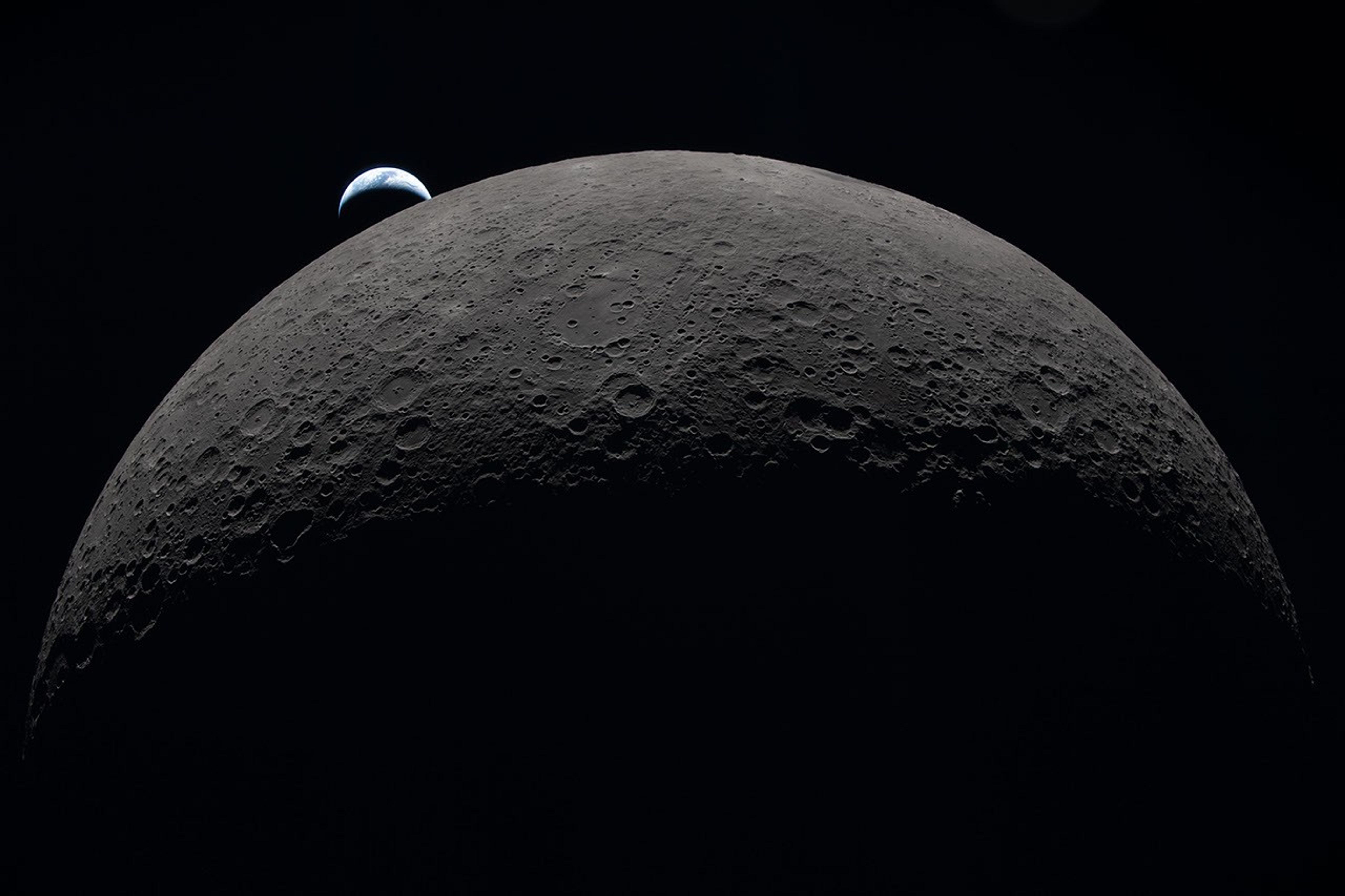
NASA’s Artemis II mission will conclude its 10-day journey around the Moon on April 10, 2026, when the crew splashes down off the California coast. While additional imagery will continue to be processed after their return, the astronauts have already delivered a remarkable collection of photos. Among them is a shot of Earthset, echoing the iconic Earthrise photos taken by Apollo 8 astronauts in 1968.
During an Earthset, the planet appears to sink below the lunar horizon. In this scene, a partially lit crescent Earth drops behind the Moon as seen by crew on the Orion spacecraft. The Earth’s sunlit side shows white clouds and blue water over the Oceania region, while the dark areas are experiencing nighttime. The image also shows incredible detail of the Moon’s surface and its overlapping craters and basins.
The image was taken at 6:41 p.m. Eastern Daylight Time on April 6, 2026, as the Artemis II astronauts passed behind the Moon’s far side. It is one of many photos taken during the seven-hour flyby, including images of a total solar eclipse, the light from several planetary neighbors, and the long shadows cast along the terminator line where lunar day meets night.
More images from the historic flyby can be viewed in the Artemis II lunar flyby gallery, and other mission photos and resources are available on the mission’s multimedia page. Past views of Earth from afar can be found in this collection from NASA Earth Observatory.
Image by NASA. Text by Kathryn Hansen, adapted from NASA resources.
JPEG (1.13 MB)
Stay up-to-date with the latest content from NASA as we explore the universe and discover more about our home planet.

Shades of a Lunar Eclipse
3 min read
A series of nighttime satellite images revealed how moonlight reaching Earth varied throughout a total lunar eclipse.
Article
City Lights Glow Along Moonlit Waters
3 min read
An astronaut photographed moonglint shimmering across the sea surface and the bright clusters of Florida’s cities at night.
Article
The Galaxy Next Door
3 min read
The Large Magellanic Cloud—one of our closest neighboring galaxies—is a hotbed of star formation that is visible to both astronauts…
Article
1
2
3
4
Next
Keep Exploring
Subscribe to Earth Observatory Newsletters
Subscribe to the Earth Observatory and get the Earth in your inbox.

Earth Observatory Image of the Day
NASA’s Earth Observatory brings you the Earth, every day, with in-depth stories and stunning imagery.

Explore Earth Science

Earth Science Data
Open access to NASA’s archive of Earth science data

Continue reading...
- Science
- Earth Observatory
- Earthset From the Lunar Far Side
- Earth
- Earth Observatory
- Image of the Day
- EO Explorer
- Topics
- More Content
- About
- Search
April 6, 2026
NASA’s Artemis II mission will conclude its 10-day journey around the Moon on April 10, 2026, when the crew splashes down off the California coast. While additional imagery will continue to be processed after their return, the astronauts have already delivered a remarkable collection of photos. Among them is a shot of Earthset, echoing the iconic Earthrise photos taken by Apollo 8 astronauts in 1968.
During an Earthset, the planet appears to sink below the lunar horizon. In this scene, a partially lit crescent Earth drops behind the Moon as seen by crew on the Orion spacecraft. The Earth’s sunlit side shows white clouds and blue water over the Oceania region, while the dark areas are experiencing nighttime. The image also shows incredible detail of the Moon’s surface and its overlapping craters and basins.
The image was taken at 6:41 p.m. Eastern Daylight Time on April 6, 2026, as the Artemis II astronauts passed behind the Moon’s far side. It is one of many photos taken during the seven-hour flyby, including images of a total solar eclipse, the light from several planetary neighbors, and the long shadows cast along the terminator line where lunar day meets night.
More images from the historic flyby can be viewed in the Artemis II lunar flyby gallery, and other mission photos and resources are available on the mission’s multimedia page. Past views of Earth from afar can be found in this collection from NASA Earth Observatory.
Image by NASA. Text by Kathryn Hansen, adapted from NASA resources.
Downloads
April 6, 2026
JPEG (1.13 MB)
References & Resources
- NASA (2026, April 7) Artemis II Lunar Flyby. Accessed April 9, 2026.
- NASA (2026, April 4) NASA Answers Your Most Pressing Artemis II Questions. Accessed April 9, 2026.
- NASA (2026, April) Artemis II Multimedia. Accessed April 9, 2026.
- NASA (2026) Artemis II. Accessed April 9, 2026.
You may also be interested in:
Stay up-to-date with the latest content from NASA as we explore the universe and discover more about our home planet.
Shades of a Lunar Eclipse
3 min read
A series of nighttime satellite images revealed how moonlight reaching Earth varied throughout a total lunar eclipse.
Article
City Lights Glow Along Moonlit Waters
3 min read
An astronaut photographed moonglint shimmering across the sea surface and the bright clusters of Florida’s cities at night.
Article
The Galaxy Next Door
3 min read
The Large Magellanic Cloud—one of our closest neighboring galaxies—is a hotbed of star formation that is visible to both astronauts…
Article
1
2
3
4
Next
Keep Exploring
Discover More from NASA Earth Science
Subscribe to Earth Observatory Newsletters
Subscribe to the Earth Observatory and get the Earth in your inbox.
Earth Observatory Image of the Day
NASA’s Earth Observatory brings you the Earth, every day, with in-depth stories and stunning imagery.
Explore Earth Science
Earth Science Data
Open access to NASA’s archive of Earth science data
Continue reading...